Press
2008.08
Kim Bok Young | Art Critic
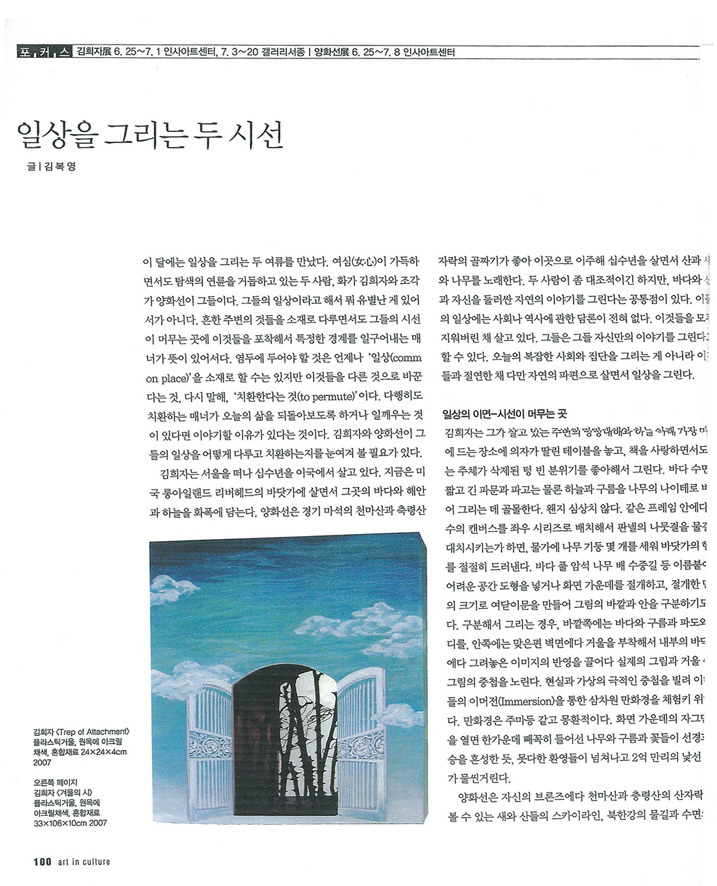
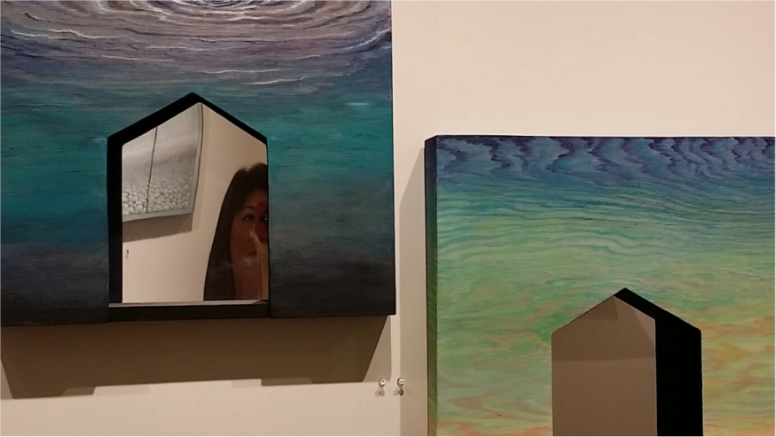
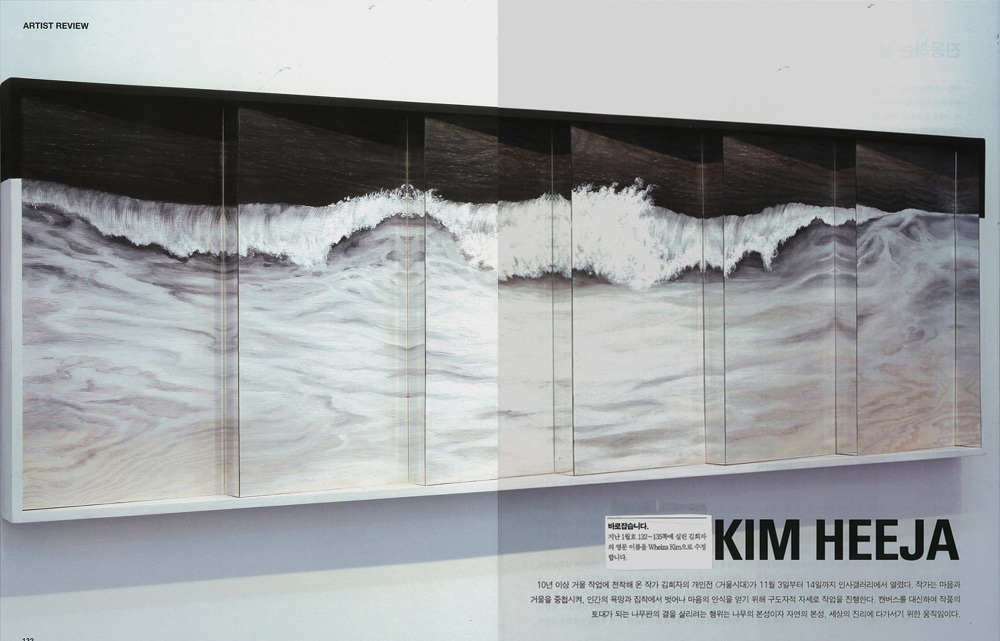
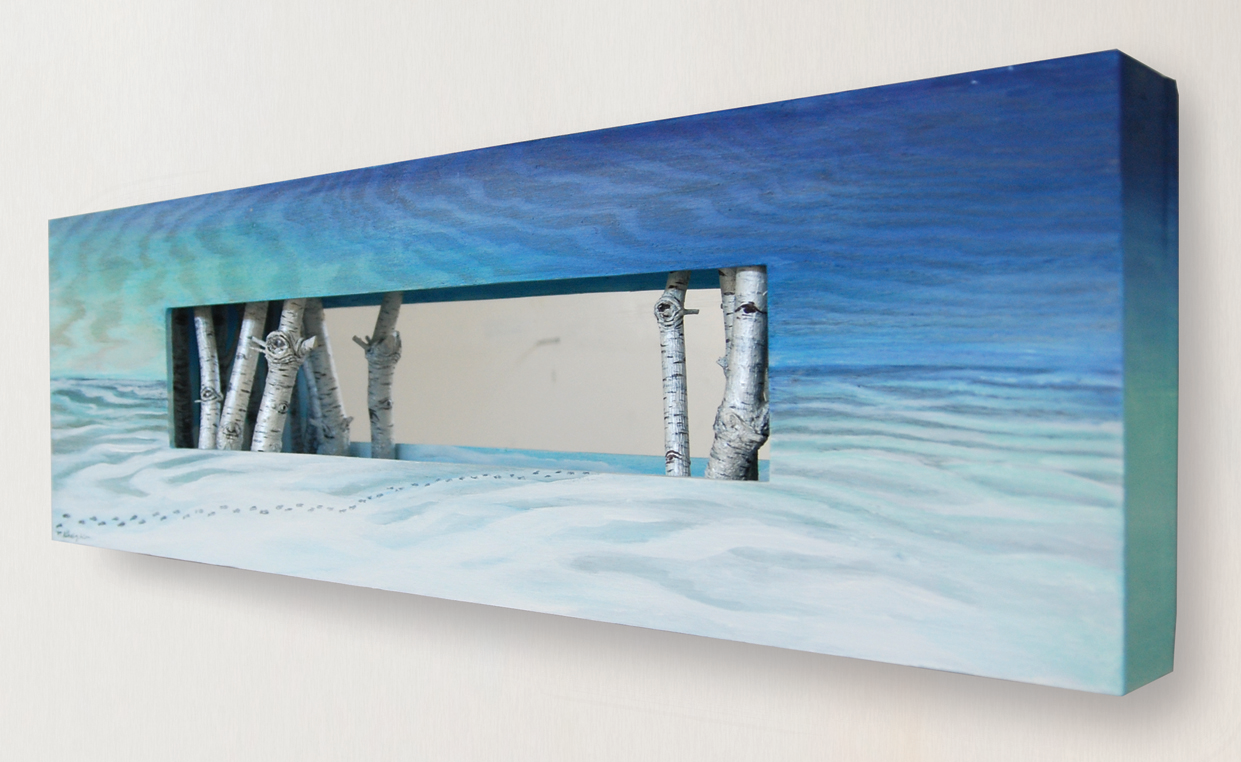
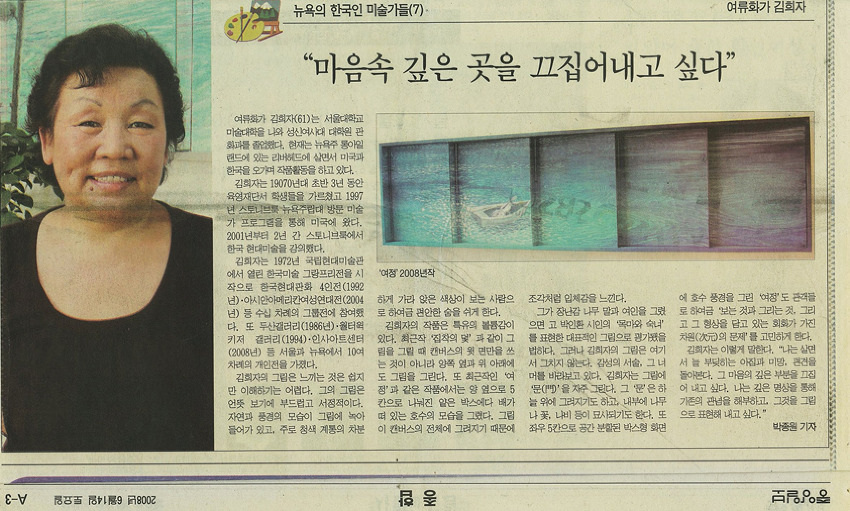
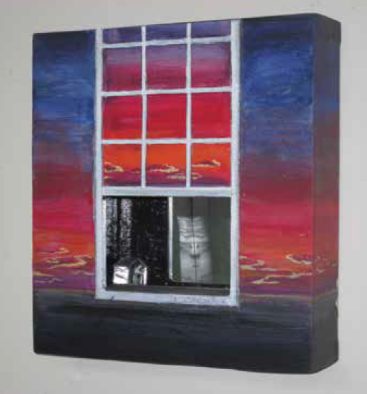
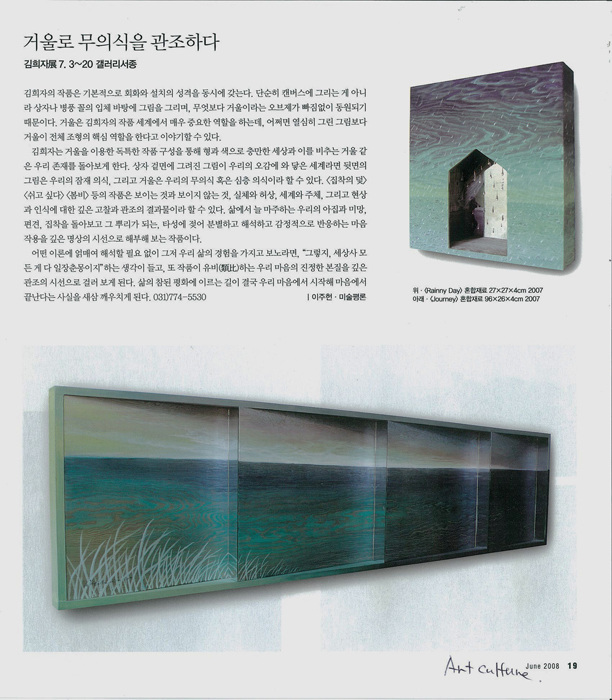
This month, I encountered two women artists who take everyday life as their subject. They are the painter Wheiza Kim and the sculptor Yang Hwa-sun, two artists whose work is imbued with a distinctly feminine sensibility while reflecting years of sustained exploration. It is not that there is anything particularly unusual about the everyday life they depict. Rather, what is significant is the way they engage with ordinary things around them, capturing them wherever their gaze comes to rest and transforming them into distinctive realms of their own.
What should be noted is that although the “common place” may always serve as their subject matter, they transform it into something else—in other words, they “permute” it. Fortunately, their particular modes of permutation prompt us to reflect upon life today, and it is precisely this that gives us reason to discuss their work. It is therefore worth paying close attention to how Wheiza Kim and Yang Hwa-sun engage with and transform their everyday lives.
Wheiza Kim left Seoul and has lived in the United States for more than a decade. She now lives by the sea in Riverhead, Long Island, where she captures the sea, the coast, and the sky on her canvases. Yang Hwa-sun, drawn to the valleys along the slopes of Cheonmasan and Chukryeongsan in Misa, Gyeonggi Province, moved there and has lived for more than a decade, giving expression to the mountains, streams, and trees.
Although the two artists may appear somewhat contrasting, they share a common interest in telling stories of nature through the sea, mountains, and the natural world surrounding them. Their everyday worlds contain none of the discourses of society or history. They live having erased such concerns entirely. One might say that they tell only their own stories. Rather than depicting the complexities of contemporary society and its collective structures, they distance themselves from them, living instead among fragments of nature and portraying the everyday.