Press
2006.07.08
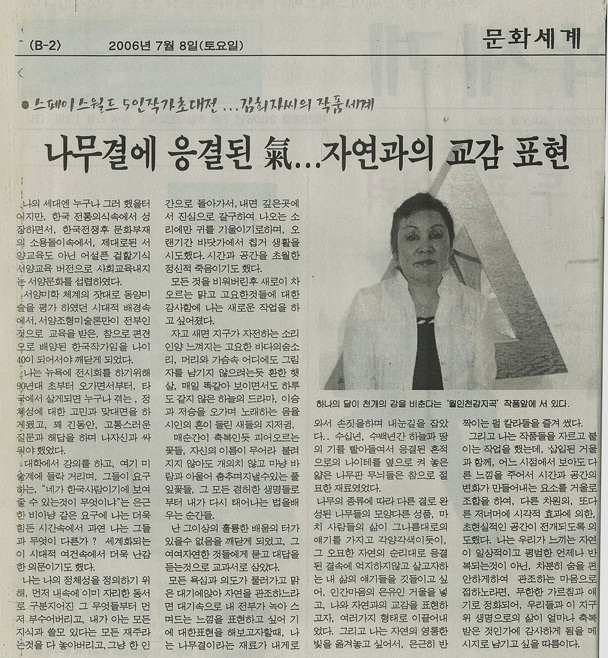
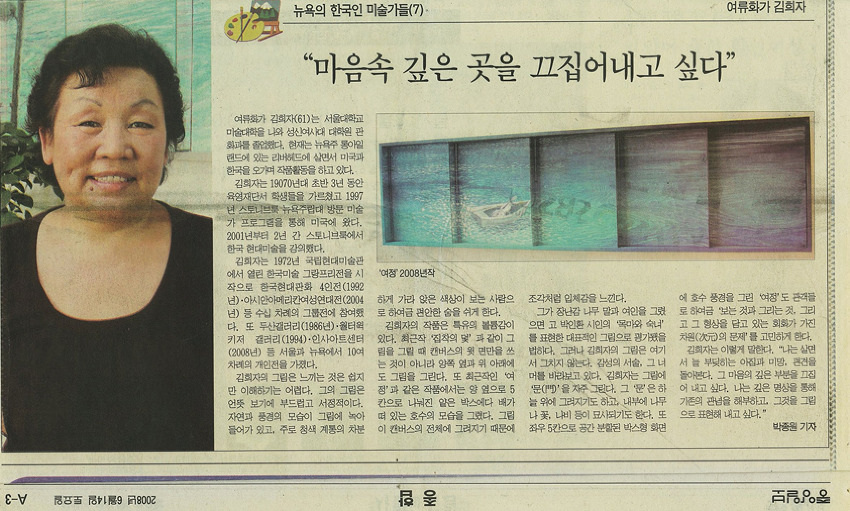
The Segye Times New Yor
Like many others of my generation, I grew
up within the traditions of Korean consciousness. Yet, in the cultural vacuum
that followed the Korean War, I came to absorb Western culture through an
education that offered little more than a superficial introduction to Western
ideas rather than a proper understanding of them.
Against the historical backdrop of an era
in which Eastern art was evaluated according to the standards of Western
aesthetics, I was educated to believe that Western theories of visual art
constituted the entirety of artistic knowledge. It was only upon reaching the
age of forty that I realized I had become a Korean artist shaped by such deeply
ingrained prejudices.
Beginning in the early 1990s, I traveled
frequently to New York for exhibitions. As I began spending time in a foreign
country, I found myself confronting questions of identity that anyone living
abroad inevitably encounters. For a considerable period, I struggled with
myself, enduring painful questions and searching for answers.
While teaching at universities and engaging
with the local art community, I was repeatedly confronted with a subtly
derisive demand: “What can you show us precisely because you are Korean?” This
made an already difficult period even more challenging. What, indeed,
distinguished me from them? In an increasingly globalized world, the question
became all the more perplexing.
To define my own identity, I first sought
to dismantle the distinctions between East and West that had already taken root
within me. I relinquished all the knowledge I had acquired and every skill I
had considered useful. I wanted to return to being simply a human being,
listening only to the voice that arose from the deepest and most earnest
longings within me. For an extended period, I withdrew into seclusion by the
sea. It was, in a sense, a spiritual death that transcended time and space.
After emptying myself of everything, I
became grateful for the clarity and tranquility that gradually emerged within
me, and I felt the desire to begin creating new work.
The quiet breathing of the sea, which at
daybreak seemed almost like the sound of the Earth turning on its axis; the
radiant sunlight that appeared determined to leave no shadow anywhere in my
mind or heart; the drama of the sky, seemingly identical each day yet never
once the same; and the birdsong, imbued with the spirit of a poet whose
melodies moved between this world and the next.
Flowers blossoming as though every moment
were a blessing; grasses and wildflowers that, indifferent to whether anyone
called them by name, simply danced with the wind; and all those humble living
beings from which I learned how to be born anew.
I came to realize that no greater place of
learning could exist. I made these beings, dwelling in effortless harmony with
nature, my teachers, asking them questions and listening for their answers.
As all desires and intentions receded, I
would sit in the clear atmosphere and contemplate nature, feeling as though my
entire being were dissolving into the surrounding air. I wanted to express this
sensation and to give form to the energy, or qi, that I experienced. It
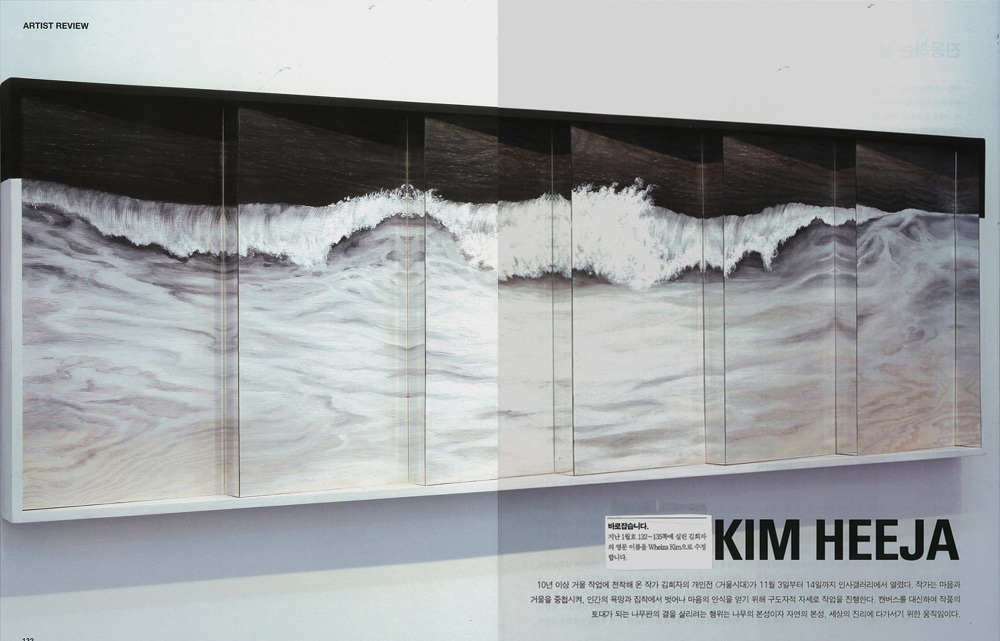
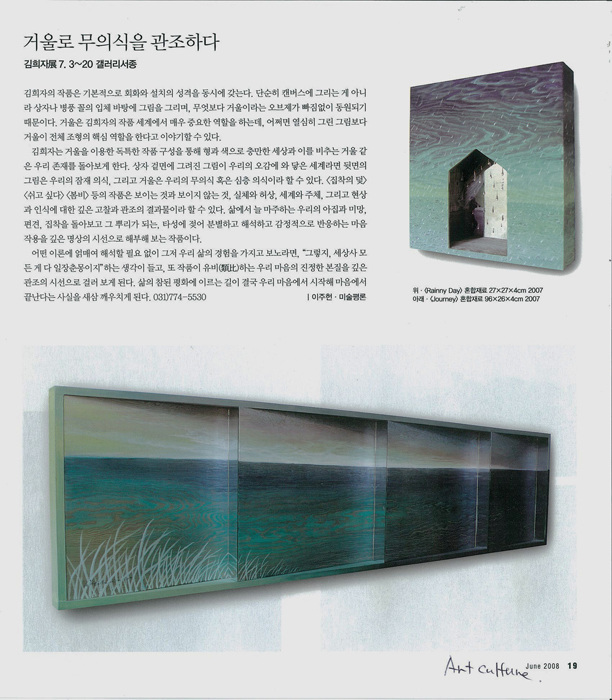
was then that wood grain seemed to approach me, beckoning and capturing my
attention. The patterns on thin wooden panels, cut across the annual rings of
trees, were extraordinary materials: traces of energy absorbed from heaven and
earth and condensed over decades, even centuries.
Each species of tree possesses its own
grain, form, and character, just as human lives unfold in countless different
ways, each carrying its own story. I wished to imbue these naturally formed
patterns with the story of my own life, aspiring to live without resisting the
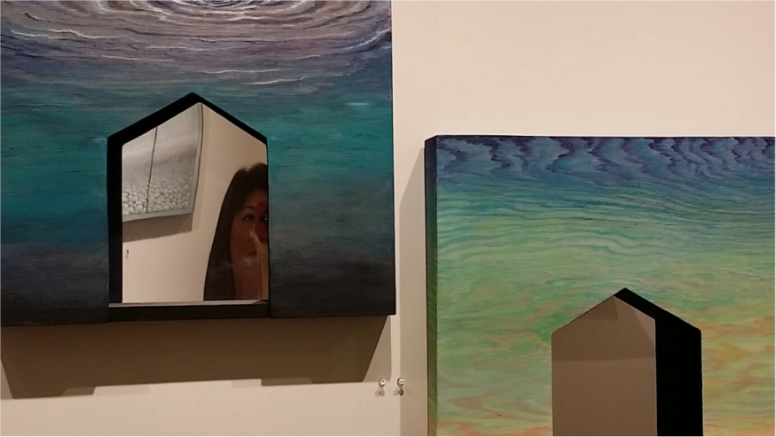
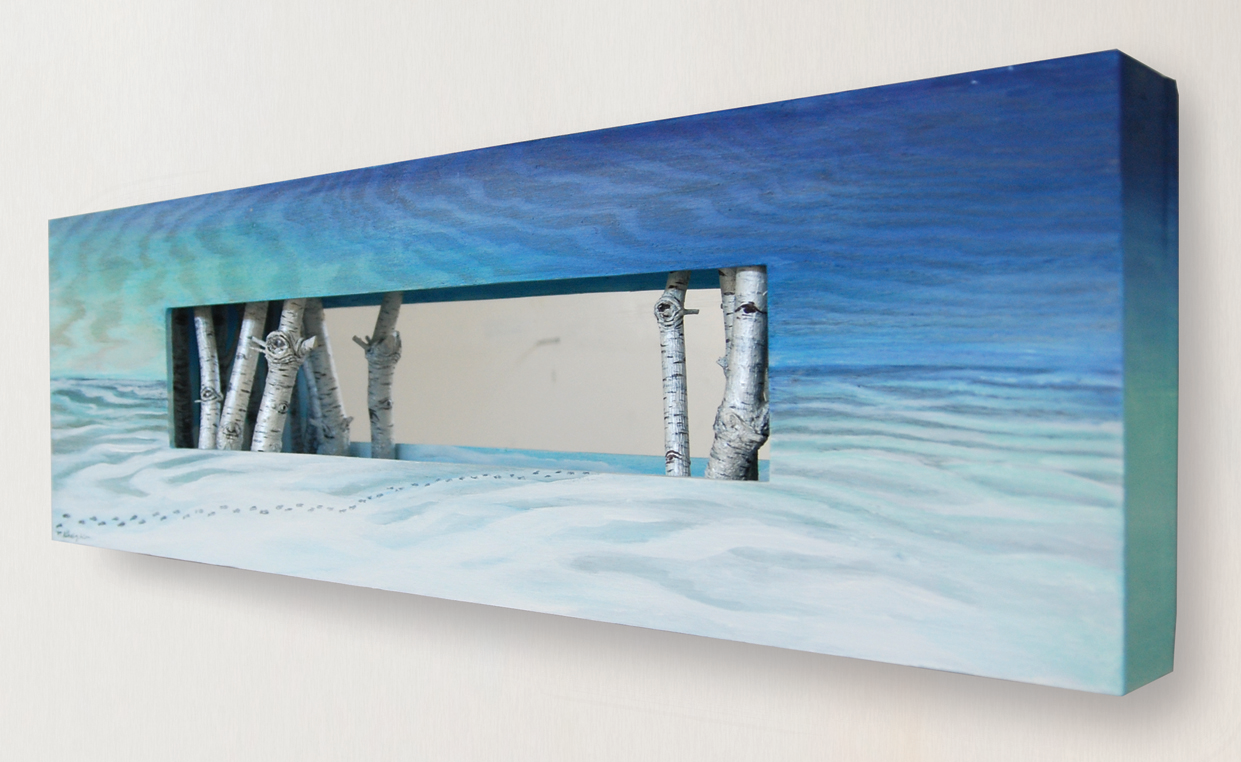
subtle order of nature. I incorporated mirrors as metaphors for the human mind
and developed various forms through which to express my communion with nature.
I also frequently used softly shimmering pearlescent colors in an effort to capture
the luminous beauty of the natural world.
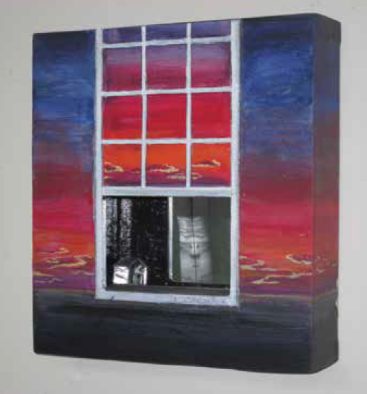
I began cutting and assembling elements of
my works, incorporating mirrors so that they would appear different depending
on the viewer's position. By combining these elements with mirrors, I sought to
bring together the changes produced by time and space, creating visual effects
through which surreal spaces might unfold beyond ordinary dimensions of
perception. I wanted to convey that nature, as we experience it, is neither
merely ordinary nor simply a repetition of the familiar. When we approach it
with calm breathing and a contemplative mind, nature reveals inexhaustible
teachings and stories that purify our awareness. Ultimately, I wished only to
leave a message of gratitude for how profoundly blessed we are to live as
beings sharing life on this Earth.