Exhibitions
2008.07.03
Gallery Sejong
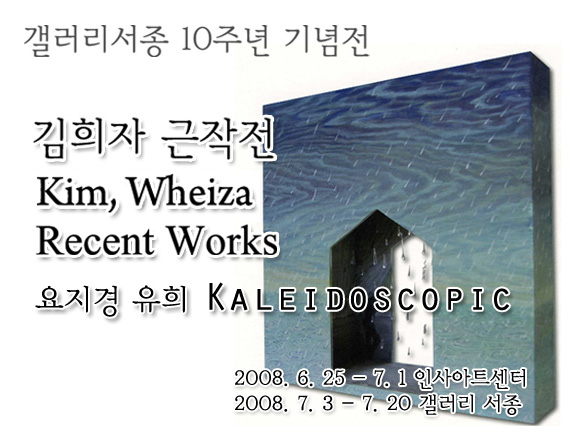
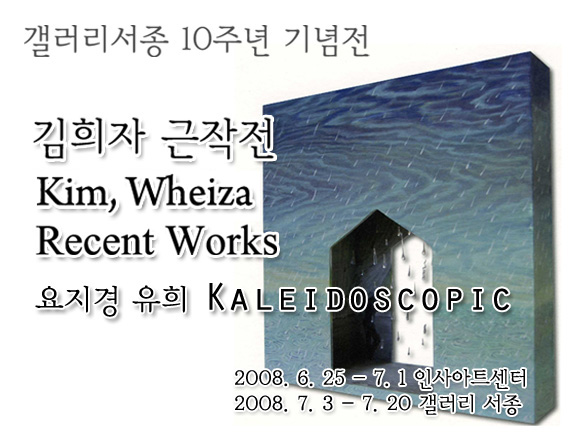
Currently living and working in New York, Wheiza Kim was one of the prominent Korean women artists of the 1980s and was highly active in Seoul. Beginning with an invitational exhibition at the East-West Cultural Studies Gallery in 1993, she held a number of solo exhibitions while traveling between Seoul and New York.
After being accepted as a visiting artist at the State University of New York, Kim secluded herself near the coast of Long Island, close to the university. There, she devoted herself entirely to her work, listening closely to her inner voice in an effort to reconcile existential questions about her life with her artistic practice.
Following her 1997 solo exhibition, art critic Donald Kuspit, a leading figure in American contemporary art criticism, wrote of her work: “……Wheiza Kim has sublimated the profound spiritual world of the East and established a distinctive artistic world through a method entirely her own, unlike that of any previous artist.……Her work is deeply convincing and moving.……Wheiza Kim is an artist who has redeemed herself through art.”
Kim believes that if an artist cannot redeem oneself through one’s own work, the work amounts to little more than decoration without a soul. In other words, she regards artistic practice as a form of discipline directed toward self-realization and introspection. For more than twenty years, she has undertaken a wide range of experimental works centered on the question of how the workings of the mind—fundamental to human existence yet impossible to see—can be made visible.
She has extensively studied comparative religion, Western psychology, and Yogācāra, an Eastern philosophical tradition concerned with consciousness, while immersing herself in Eastern philosophy and contemplating her identity as a Korean.
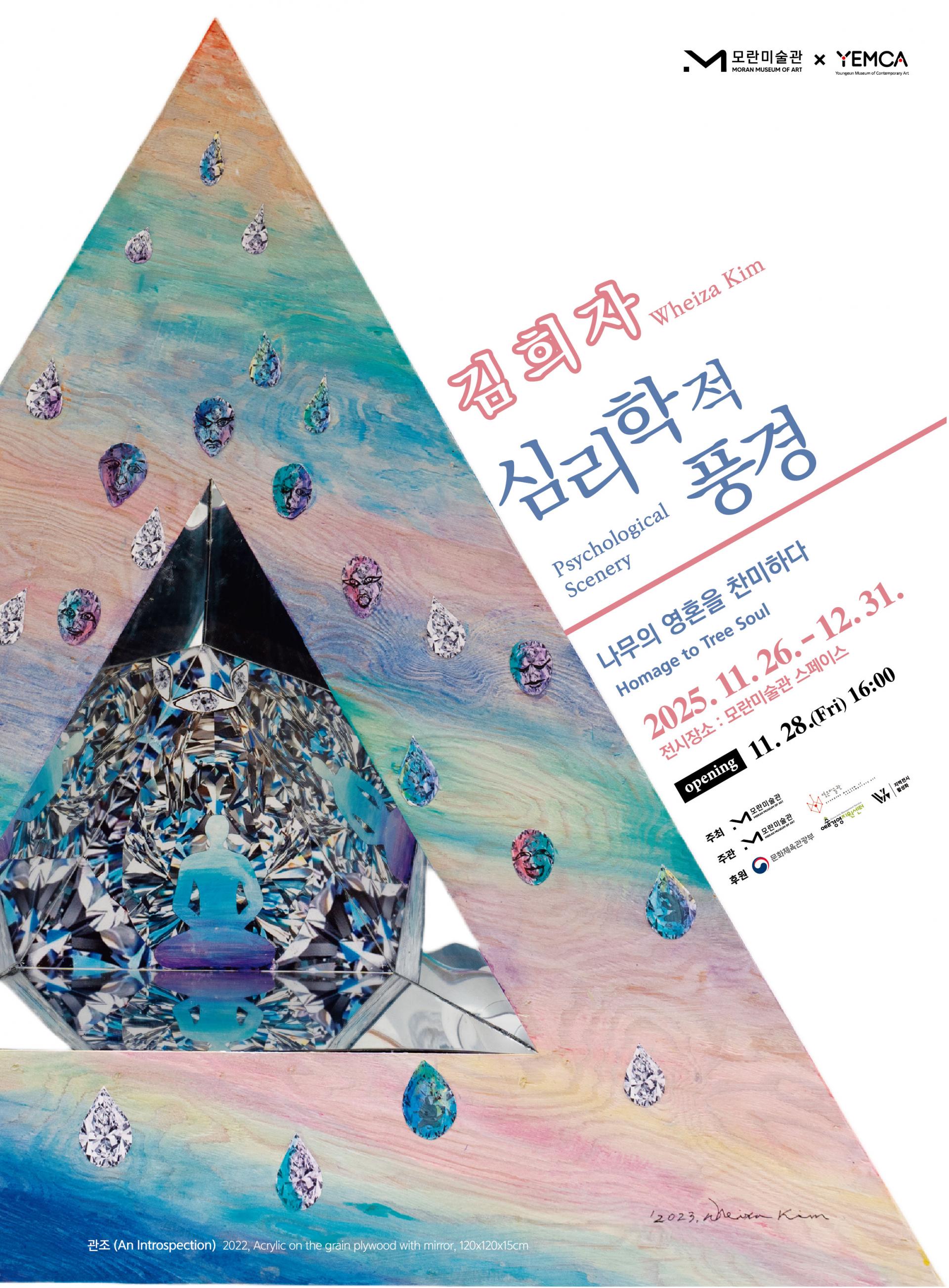
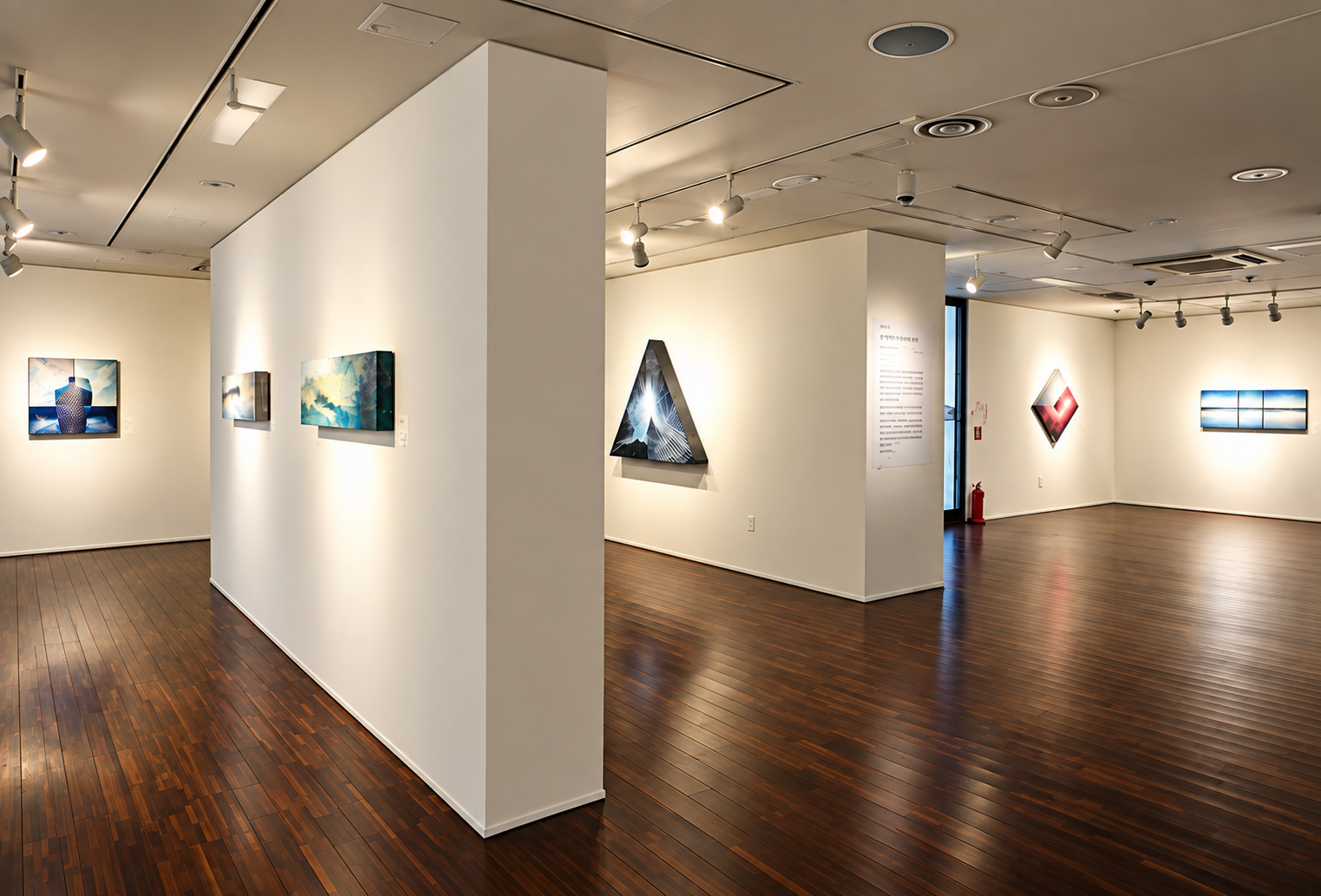
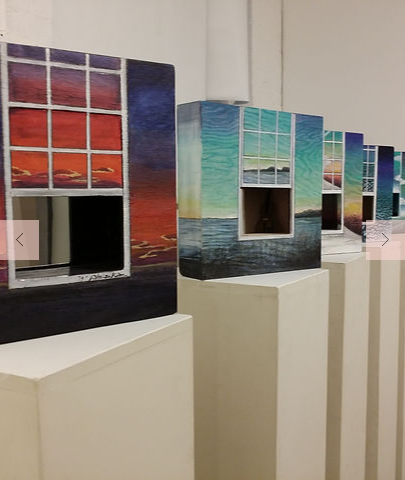
To express the energy of qi (氣), which she encountered through Eastern philosophy and which cannot be seen but can only be sensed, Kim uses wood with its natural grain preserved as a canvas. She also incorporates mirrors—traditionally compared to the human mind in Zen Buddhism—as metaphors for the workings of the mind.
Through these elements, she connects meditative and fantastical images of nature with narratives of the secular world, conveying a quiet message. She has also drawn upon the structure of ālayavijñāna, or the eighth consciousness, in Yogācāra philosophy to develop the various forms of her works.
Exhibitions
2025.11.26

Exhibitions
2021.03.20
Exhibitions
2016.01.12
Exhibitions
2008.07.03